
Project idea and context
CREDIT #1-7 starts from two observations: firstly, that every person needs some form of credit – and therefore trust – to realize their own potential; and secondly, that collaboration and cooperation between people not only enriches their experiences; as the central principle of an increasingly networked society, it is also sparking new definitions of authorship, of personal and social profit, of trust, and, therefore, of money.
Credit is a human right.
KREDIT #1-7 addresses these observations. At the same time, the project is also an attempt to explore the conditions under which art emerges in everyday life lived within various social contexts and networks. Investigating money as the medium of relationships, and its potential, as credit, to empower, is the art process itself.
The focus is on making visible what is usually invisible, because the immaterial and abstract nature of money obscures it: namely, that behind every transaction lies cooperation, an encounter, a story, a social process.
CREDIT #1-7 questions the rules of money, highlighting the fact that the way a currency is defined structures social processes at the deepest level.
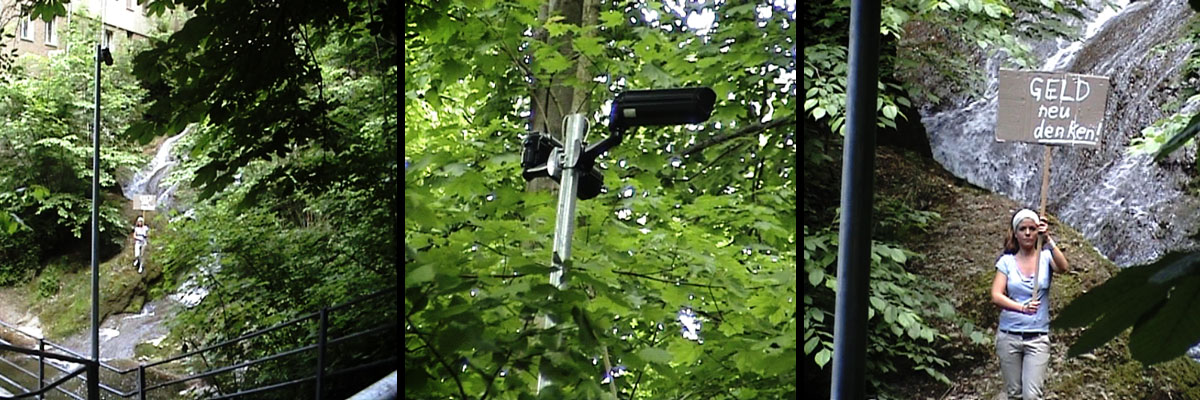
The production of each Chain Film was dependent on temporary relationships established between several participants, whose individual contributions can never be exclusively traced within the final film. The project thus produces real economic added (albeit immaterial) value, while at the same time interrogating the economic conditions of art and problematizing the notion of singular authorship.
CREDIT #1-7 grew out of the artist’s engagement with alternative financing strategies for artistic production. Inspirations included texts about currency design and alternative economics, by, for example, former manager of the National Bank of Belgium Bernard Lietaer, or social thinker and researcher Wilhelm Schmundt.
You can read more about the project’s development and conceptualization here. There is also a text by Sylwia Lysko on the art historical context and a few background aspects of CREDIT #1-7 here.